
Home
About
MS & Movement
Training
Visualization
Resources
Events
Contact
Donate
Martial Arts for Multiple Sclerosis
Adaptive movement, visualization, resilience, and MS-aware martial arts practice rooted in lived experience.
Martial Arts for Multiple Sclerosis
MA4MS, Martial Arts for Multiple Sclerosis, exists because martial arts practice does not have to end when the body changes. Multiple sclerosis can affect balance, stamina, coordination, heat tolerance, vision, sensation, pain, energy, and confidence. Those changes are not imaginary. They should not be dismissed with shallow motivation. At the same time, a changing body does not erase discipline, identity, imagination, or the need to remain engaged in life.
Author David Ellinger created MA4MS from the intersection of martial arts, technology, MS, and adaptive thinking. The project is personal because it comes from lived experience. It is also practical because it focuses on what can be modified: posture, breathing, hand movement, seated drills, slow forms, mental imagery, pacing, and the emotional resilience needed to continue when practice no longer looks like it once did.
At its core, MA4MS is about adaptation. A movement can be standing, seated, supported, shortened, slowed, or visualized. A martial arts form can become a mental rehearsal. A stance can become posture awareness. A breathing drill can become a way to regain focus. A small movement can still be meaningful when it is performed with awareness and safety.
The MA4MS approach is supported by careful reading of external resources, not by exaggerated promises. The National MS Society describes exercise and physical activity as playing a crucial role in MS management. Mayo Clinic also discusses exercise in relation to strength, balance, muscle tone, and coordination. Those ideas do not mean every person with MS should train the same way. They mean movement deserves respect, adaptation, medical awareness, and practical judgment.
The goal is not to present martial arts as a cure for MS. The goal is to build an educational resource where people with MS, caregivers, martial artists, instructors, and supporters can think more clearly about movement and mind-body practice. MA4MS values safety, honesty, dignity, and the refusal to treat adaptation as failure.
The site is organized around several connected topics: MS and movement, adaptive martial arts training, mental imagery and visualization, resources, events, contact, and ways to support the project. Each page is internally linked so readers and search engines can understand that these are not isolated topics. They are part of one focused system: adaptive martial arts and multiple sclerosis.
Helpful Internal Paths
MS & Movement
Learn how pacing, fatigue awareness, breathing, and body awareness shape adaptive movement.
Adaptive Training
Explore seated, supported, slowed, and visualized martial arts practice.
Visualization
Use mental rehearsal to stay connected to movement when physical practice is limited.
Resources
Review external references and educational resources supporting the MA4MS approach.
Relevant Visual Examples
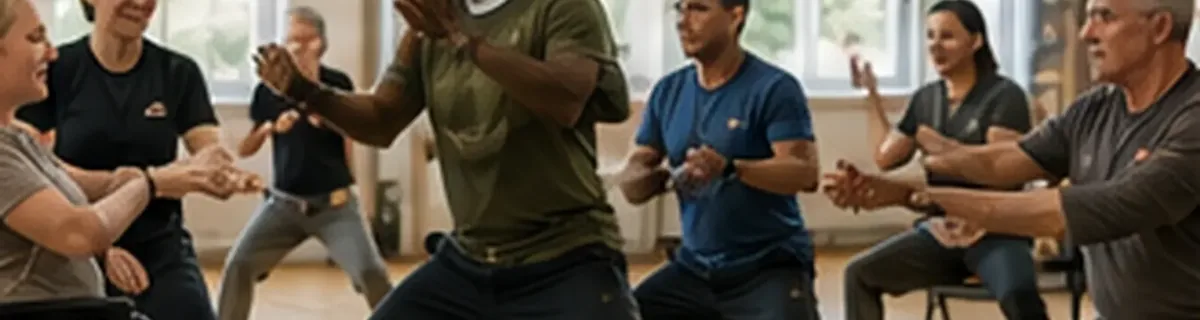
These photorealistic-style visual examples are included to help visitors understand the MA4MS themes of adaptive movement, seated martial arts practice, visualization, and safe training. They are educational examples, not medical instruction.


Research References and External Resources
The external links below are provided as dofollow educational resources. They support the MA4MS approach to MS-aware movement, balance, motor imagery, rehabilitation, fatigue awareness, and adaptive practice.
National MS Society: Exercise and Physical Activity
“Exercise and physical activity play a crucial role in the management of MS.”
Supports adapted movement, pacing, and safe physical activity.
Mayo Clinic: Exercise and Multiple Sclerosis
“Regular aerobic exercise can increase strength and balance.”
Supports the focus on balance, strength, and medical guidance.
Mayo Clinic: MS Diagnosis and Treatment
“Regular exercise can help improve your strength, muscle tone, balance and coordination.”
Supports movement, coordination, and adapted activity.
PubMed: Effectiveness of Motor Imagery in Patients with Multiple Sclerosis
“MI and its combination with relaxation exercises have been shown to be effective.”
Supports mental imagery and relaxation as research-informed educational topics.
PMC: Motor Imagery on Motor Recovery in Multiple Sclerosis
“Findings showed that pwMS using MI had significant improvements.”
Supports careful discussion of motor imagery for MS.
PMC: Neuroplasticity and Motor Rehabilitation in Multiple Sclerosis
“Motor rehabilitation is routinely used in clinical practice.”
Supports discussion of rehabilitation, repetition, and neuroplasticity.
PMC: Exercise and Lifestyle Physical Activity Recommendations for People with MS
“Wellness is a priority for people with multiple sclerosis.”
Supports a broader wellness and physical activity framework.
Safety Reminder
Educational content only. MA4MS does not provide medical advice, diagnosis, treatment, physical therapy, or emergency guidance. Anyone living with multiple sclerosis should speak with a qualified healthcare professional before starting or changing exercise, martial arts practice, breathing work, visualization routines, or rehabilitation-related activity.